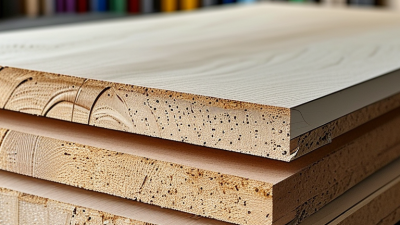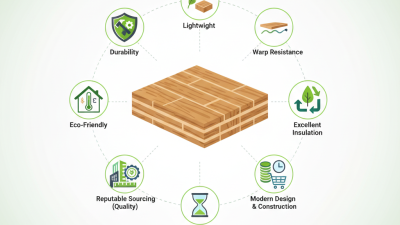
Choosing the best China Poplar Plywood requires more than comparing prices on a supplier website. Global buyers must examine strength, moisture resistance, surface quality, bonding performance, and supply consistency. Poplar Plywood is valued for its light weight, smooth face, easy machining, and flexible use in furniture, cabinetry, packaging, and interior projects. Yet these advantages vary sharply between factories.
A reliable evaluation begins with the panel itself. Check the core structure, veneer thickness, voids, sanding quality, and edge condition. Ask for clear data on formaldehyde emissions, moisture content, thickness tolerance, and adhesive performance. Small details matter. A clean edge can reduce waste during cutting. A stable core can prevent visible warping after shipment. Factory experience also matters, especially when the supplier can provide production records, inspection reports, and consistent export packaging.
There is no universal “best” Poplar Plywood for every buyer. A furniture maker may need a smooth, paint-ready surface. A packaging manufacturer may prioritize low weight and cost. A construction-related project may require stronger bonding and tighter tolerances. Some buyers focus heavily on the quoted price, but that can hide quality risks. This is where careful sampling helps. Compare several panels under real working conditions, not only under showroom lighting.
The process is practical, but not perfect. Supplier documents can be incomplete. Samples may not represent every production batch. Independent inspection remains valuable. By combining technical specifications, factory verification, sample testing, and honest communication, buyers can make a more reliable decision and build a stable long-term supply relationship.
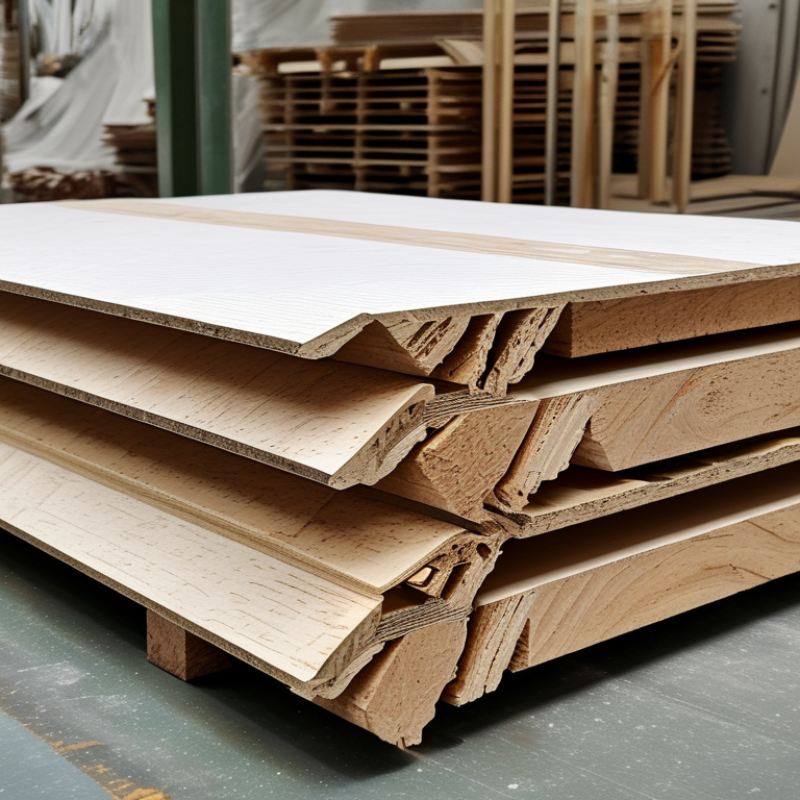
The best China poplar plywood is defined by dependable performance, not a low purchase price. Global buyers should examine the panel’s core, face veneer, bonding quality, and production consistency. Poplar offers a light color and easy machining, but weak core joints can cause edge gaps or surface swelling.
A reliable panel usually has evenly stacked veneers, tight joints, and a flat surface after pressing. Check thickness tolerance with a caliper, not only a supplier datasheet. Ask for moisture results, formaldehyde test reports, and applicable plywood grade documentation.
Emission requirements differ between markets, so one certificate may not satisfy every project. Keep that in mind.
Real inspection should include random carton sampling. Look for bubbling, cracks, open joints, and uneven sanding under clear light. A simple drop test on packaged corners can reveal weak protection. Packaging matters more than many buyers expect. Damp containers can damage good plywood before installation.
Specifications should match the application. Furniture panels may need a cleaner face, while packaging panels may prioritize strength and cost. Request a pre-production sample and compare it with the final shipment. This step is often skipped.
No panel is perfect. Even careful suppliers may show small color variations or minor thickness differences. The important question is whether these differences stay within an agreed tolerance. Clear inspection records, traceable batches, and responsive communication make China poplar plywood more dependable for international purchasing.
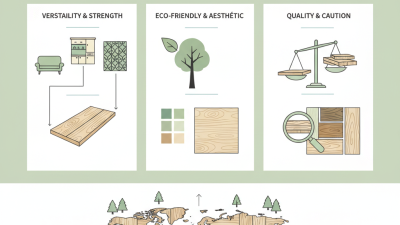
China poplar plywood begins with carefully selected poplar logs, usually sorted by diameter, moisture, and visible defects. Fresh logs are peeled into thin veneers, often around 1.5 to 2.5 millimeters thick. These veneers are clipped, dried, and repaired before assembly. Drying matters greatly. Excess moisture can cause bubbling, warping, or weak bonding during pressing.
Workers arrange veneers with alternating grain directions. This cross-layer structure improves strength and dimensional stability. Adhesive is spread between layers, then the panel enters a cold press and a hot press. Temperature, pressure, and pressing time must match the panel thickness and glue type. A few degrees can change the result. The process sounds tidy, but real production needs constant adjustment.
Grading is not based on appearance alone. Buyers should check face quality, core gaps, thickness tolerance, bonding strength, moisture content, and formaldehyde emission results. Grades may differ by national standard, application, and supplier specification. A clean surface may still hide weak inner layers. Ask for production samples and independent test reports. Check the panel edge after cutting. A reliable core should look compact, with few open joints or overlapping veneers. Some mills mark every panel carefully, while others depend too much on visual sorting. That assumption can fail. Clear inspection records, batch numbers, and agreed acceptance limits make global purchasing more dependable. One overlooked detail is enough to create trouble.
For international buyers, technical consistency matters more than a low invoice price. FAO’s 2023 forest-products statistics place global wood-based panel production near 400 million cubic metres. That scale increases competition and exposes weak quality control quickly.
Poplar plywood should have stable veneer thickness, balanced core layers, and minimal internal gaps. A light panel is useful. However, excessive lightness may reduce screw holding and bending strength.
Moisture resistance requires verified glue performance, not a sales promise. EN 314-2 classifies bonding quality for different service conditions. EN 636 also distinguishes plywood for dry, humid, and exterior applications.
Buyers should request test results, not only certificates. Check thickness tolerance, panel squareness, density, bending strength, and delamination after soaking.
Small edge openings can become serious during sea transport.
Formaldehyde emissions deserve equal attention. The U.S. EPA TSCA Title VI limit for hardwood plywood is 0.05 ppm. European buyers often specify E1 performance under EN 717-1.
Packaging must protect corners and keep panels away from standing water. In factory inspections, I would compare random samples with the approved sample, because one attractive sheet proves very little.
This is where purchasing teams sometimes overestimate paperwork. Independent laboratory testing remains safer.
What Is the Best China Poplar Plywood for Global Buyers?
China remains a major plywood source. FAO’s FAOSTAT Forestry Production and Trade data reports Chinese plywood output above 200 million cubic metres in 2022. Scale, however, does not guarantee stable quality. I compare suppliers through factory audits, production records, and recent shipment samples. The sample should show uniform poplar veneers, tight core joints, and no visible delamination after conditioning. Ask for thickness tolerance, moisture content, density, and formaldehyde test results. A low price often begins with thinner face veneers or inconsistent core repairs. That detail matters.
Certifications must match the destination market. For European construction use, check EN 636 performance classification and EN 13986 documentation. For North American buyers, request testing against TSCA Title VI or CARB Phase 2 formaldehyde limits. A chain-of-custody certificate can support responsible sourcing, but it does not replace product testing. Confirm the certificate holder, factory address, product scope, and expiry date. I also request an independent inspection before loading, including carton labels, panel dimensions, packaging strength, and container moisture protection. ISO 12465 provides a useful plywood reference, yet buyers should not treat it as automatic proof of export compliance. I have seen attractive reports with unclear test dates. That is a warning. Suppliers should provide batch numbers linking laboratory results to the actual shipment, plus packing lists and commercial documents consistent with customs requirements.
| Evaluation Dimension | Acceptable Purchasing Baseline | Preferred Export-Ready Specification | What Global Buyers Should Verify |
|---|---|---|---|
| Core Material | Poplar veneer core with clearly stated species and origin. | Uniform poplar core, controlled veneer grading, limited core gaps and overlaps, and consistent lay-up. | Review veneer-grading rules, core-assembly records, production photographs, and independent pre-shipment inspection results. |
| Common Density Range | Approximately 400–550 kg/m³ for lightweight poplar plywood, depending on moisture, veneer grade, and construction. | A controlled density range stated in the technical data sheet, with batch-to-batch test records. | Confirm the test method, sample conditioning, tolerance, and whether the quoted density refers to the panel or only the wood species. |
| Thickness and Size | Common thicknesses include 3–30 mm; common sheet sizes include 1220 × 2440 mm and metric equivalents. | Thickness, length, width, squareness, and edge straightness are controlled according to the agreed product specification. | Request a dimensional-tolerance schedule and check whether measurements are taken before or after conditioning. |
| Moisture Content | Typically targeted around 6–14% for interior plywood, subject to destination climate and product application. | Moisture target is agreed in writing and verified by calibrated moisture meters or laboratory testing. | Ask for sampling locations, test equipment calibration, conditioning procedure, and results from the actual shipment. |
| Bonding Performance | Interior-use panels should have a clearly defined adhesive type and intended exposure category. | Exterior or humid-environment panels should demonstrate compliance with a recognized bonding requirement, such as EN 314-2 Class 3 where applicable. | Verify the standard edition, test laboratory, boiling or cyclic test results, glue type, and declared use class. |
| Formaldehyde Emissions | The emission class is stated on the technical documentation and matches the destination-market requirement. | E1 classification may be supported by EN 717-1 testing; the test report should state the measured chamber emission value and method. | For the United States, verify compliance with applicable TSCA Title VI or CARB Phase 2 requirements through an approved certification route. Do not rely only on an “E0” marketing label. |
| Construction-Product Compliance | Product standards and intended applications are clearly identified. | For construction applications in markets using European standards, documentation may reference EN 13986 and the applicable plywood standard, such as EN 636. | Confirm whether a Declaration of Performance, CE marking, or other market-specific documentation is legally required for the intended use. |
| Surface Quality | Face and back grades are defined using written defect limits. | Sanded surfaces have consistent thickness, limited open defects, controlled patches, and no unacceptable delamination or bubbling. | Approve a physical reference sample and define acceptable limits for knots, splits, discoloration, patches, sanding marks, and edge defects. |
| Mechanical Properties | Strength values are provided for the intended thickness and loading direction. | Modulus of elasticity, bending strength, internal bond, and screw-holding performance are supported by a recognized test method where relevant. | Check panel orientation, thickness, conditioning, specimen size, number of samples, and whether results are minimum, average, or characteristic values. |
| Forest Certification | The supplier provides a raw-material traceability statement. | FSC certification may be requested when responsible-sourcing claims are required by the buyer or end market. | Verify the certificate scope, validity, product category, chain-of-custody status, and whether the certificate covers the specific invoiced product. |
| Quality Management | Incoming-material inspection, in-process checks, and final inspection are documented. | An ISO 9001-certified quality-management system, supported by batch records and corrective-action procedures, provides stronger process control. | Check certificate validity, certification scope, calibration records, inspection plans, nonconformance records, and complaint-handling procedures. |
| Independent Inspection | Supplier provides internal inspection reports before shipment. | Buyer appoints an independent inspection agency for quantity, dimensions, appearance, packaging, moisture, and selected laboratory tests. | Define the inspection level, acceptance quality limit, sampling plan, test methods, and rejection or corrective-action process in the purchase contract. |
| Packaging for Export | Panels are protected with suitable wrapping, corner protection, and stable pallets. | Packaging is designed for container loading, humidity exposure, forklift handling, and long-distance transport without panel movement. | Confirm pallet dimensions, net and gross weights, moisture barriers, container loading photographs, and protection against edge damage. |
| Wood Packaging Regulation | Solid-wood pallets and crates are treated or replaced with compliant alternatives. | All applicable solid-wood packaging bears the official ISPM 15 mark and is made from debarked, treated material. | Check the mark on the actual packaging and confirm destination-country requirements before shipment. |
| Documentation Package | Commercial invoice, packing list, bill of lading, and certificate of origin are available when required. | Complete technical data sheet, certificate copies, test reports, inspection report, fumigation or ISPM 15 evidence, and shipping documents are supplied. | Match product names, quantities, dimensions, HS classification, package counts, batch numbers, and consignee information across all documents. |
| Container Utilization | Loading plan is based on sheet dimensions, pallet configuration, and maximum gross weight. | Supplier provides a documented loading diagram that reduces unused volume while maintaining safe weight distribution and product protection. | Confirm container type, pallet count, cubic volume, gross weight, moisture protection, and whether floor loading is permitted. |
| Commercial Comparison | Compare quoted price on the same thickness, size, face grade, glue class, packaging method, and delivery term. | Compare total landed cost, including inspection, certification, inland transport, ocean freight, duties, insurance, and possible rework. | Use the same Incoterm, currency, payment terms, lead time, minimum order quantity, and validity period for every quotation. |
| Recommended Buyer Score | Technical compliance: 30%; quality consistency: 25%; documentation: 15%; delivery reliability: 15%; total landed cost: 15%. | A supplier should pass all mandatory legal and safety requirements before commercial scoring is applied. | Reject any offer that cannot provide traceable test evidence, accurate product specifications, or destination-market compliance documentation. |
Note: The numerical ranges and standards shown are practical reference points for buyer comparison, not a substitute for the legal requirements of the destination market. Final specifications should be agreed in the purchase contract and verified through current test reports or independent inspection.
What Is the Best China Poplar Plywood for Global Buyers?
How to Select the Right China Poplar Plywood for Your Project
Selecting the right China poplar plywood starts with the project, not the price. Check the required thickness, core structure, surface grade, and moisture conditions. Poplar plywood is lightweight and easy to machine, making it suitable for furniture, interior panels, packaging, and joinery. Ask for production samples before placing a large order. Inspect the layers closely. Gaps, uneven veneers, and weak bonding can appear after cutting. A smooth surface may still hide internal problems.
Tips: Request test reports for formaldehyde emissions, bonding strength, and moisture resistance. Confirm whether the product meets your destination’s standards, such as EN or ASTM requirements. Check tolerance ranges, not only nominal dimensions. Ask how sheets are packed for long-distance shipping. Photograph the sample before approval. Small details matter.
Reliable selection also depends on supplier evidence. Review factory quality procedures, inspection records, and batch traceability. A clear specification sheet should state wood species, adhesive type, density, thickness tolerance, and packaging method. In practice, communication can fail when “commercial grade” means different things to each party. Define acceptable defects with photos and written examples. I have found that a cheaper panel can create higher cutting and replacement costs. Still, every project is different, and some assumptions need testing. One sample is useful. Two production checks are better.
How to Select the Right China Poplar Plywood for Your Project
Calculation: panel weight per square metre = thickness in metres × density. Actual values vary according to veneer structure, adhesive system, moisture, and manufacturing tolerance.