Leave Your Message
Global buyers are rethinking how they specify interior panels in 2026. Mdf Pre Laminated Board now serves kitchens, wardrobes, office furniture, retail fixtures, and wall systems. Its decorative surface saves finishing time. Its engineered core supports consistent cutting, drilling, and edge treatment.
According to Dr. Robert H. Falk, a respected forest-products researcher, “Panel performance begins with consistent fiber, resin, and pressing control.” This practical view remains important when comparing melamine-faced MDF, PET-faced MDF, acrylic MDF, veneer-faced MDF, and moisture-resistant grades. Each type offers a different balance of appearance, durability, machinability, emissions, and cost.
The best choice is rarely the most attractive sample. Look closer.
A glossy board may reveal fingerprints under strong showroom lighting. A low-cost core may chip around hinge holes. A moisture-resistant panel may still fail when edges remain unsealed near a sink. These details often decide whether a project performs well after installation.
This guide examines the leading Mdf Pre Laminated Board types for international purchasing in 2026. It considers surface technology, core density, thickness options, formaldehyde performance, packaging, certifications, and supply reliability. Regional climate also matters. Humid warehouses, long sea routes, and uneven site conditions can expose weak specifications.
Some market claims deserve more testing. “Premium” does not always mean stronger. Certification labels also require careful verification. Buyers should request current technical datasheets, test reports, sample panels, and production references before committing to large orders.
The board is only one part of the result. Specification discipline matters more.
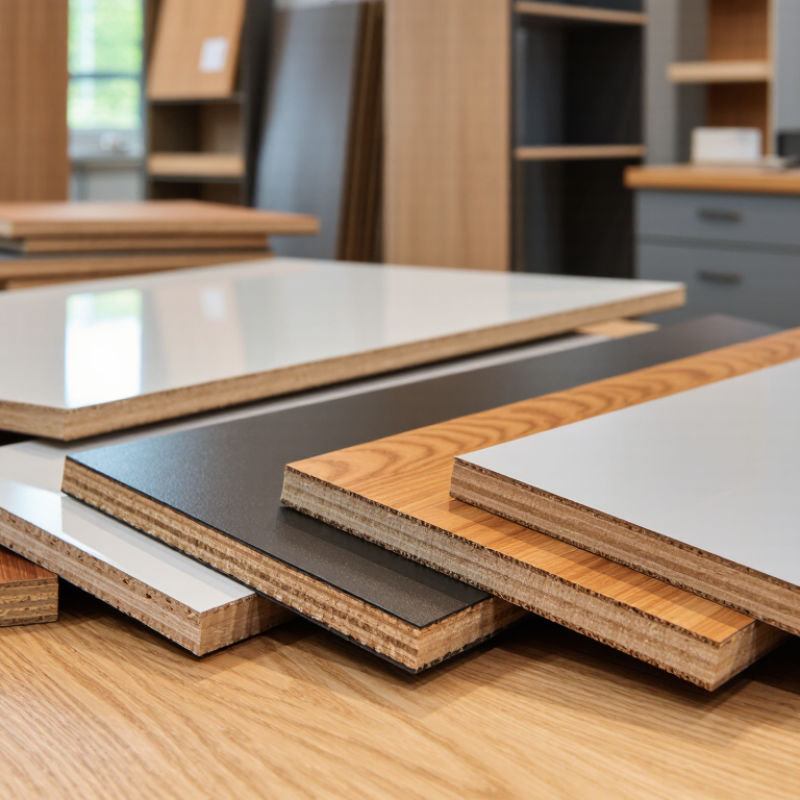
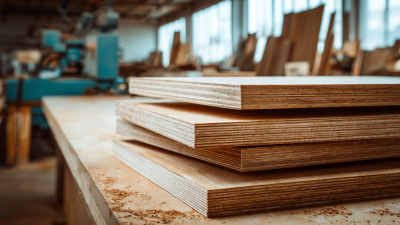
MDF pre-laminated board is an engineered wood panel finished before installation. It usually contains a dense MDF core, a resin-impregnated decorative paper, and a protective surface layer. Heat and pressure bond these layers into one usable panel. Some constructions also include a balancing layer on the reverse side.
The MDF core provides a smooth, uniform base for cutting and routing. The laminated face offers consistent color, texture, and easier cleaning than unfinished fiberboard. Common surface options imitate timber grain, stone, fabric, or solid colors. Edge quality still depends on cutting tools, feed speed, and panel density. Small chips can appear around poorly supported cuts.
A reliable buyer checks thickness tolerance, surface bonding, moisture resistance, and formaldehyde emissions. Test documents should identify the applicable market requirements, not merely show a general quality claim. Standard interior MDF is not waterproof. It may swell near sinks, wet floors, or unsealed edges. That limitation is often underestimated.
Practical inspection matters. Run a fingernail across the surface, examine the edges, and compare both panel faces. A slight shade difference may become visible under warehouse lighting. Packaging also needs attention, especially during long-distance shipping. Panels require dry storage, flat stacking, and protection from impact. No specification replaces careful handling.
| MDF Pre-Laminated Board Type | Definition and Surface Structure | Typical Thickness | Typical Density | Core Features | Common Applications | Key Buying Considerations |
|---|---|---|---|---|---|---|
| Melamine-Faced MDF | MDF covered with decorative melamine-impregnated paper, thermally fused to the panel surface. | 6–30 mm | 600–800 kg/m³ | Uniform appearance, easy cleaning, good scratch resistance, and no additional surface coating normally required. | Cabinet doors, wardrobes, shelving, office furniture, and interior wall panels. | Check surface texture, color consistency, edge-banding compatibility, formaldehyde class, and moisture rating. |
| Wood-Veneer-Faced MDF | MDF laminated with a thin natural or reconstructed wood veneer and usually protected with lacquer, oil, or another finish. | 6–25 mm | 600–780 kg/m³ | Natural wood appearance, good dimensional uniformity, and a smooth base suitable for machining. | Premium furniture, doors, wall cladding, decorative partitions, and hospitality interiors. | Evaluate veneer species, grain matching, veneer thickness, finish durability, and batch-to-batch color variation. |
| PVC-Faced MDF | MDF finished with a decorative PVC film bonded to one or both faces, often by vacuum pressing or lamination. | 12–25 mm | 600–800 kg/m³ | Wide design selection, moisture-resistant surface, seamless appearance, and suitability for shaped profiles. | Kitchen doors, bathroom furniture, decorative panels, retail fixtures, and routed components. | Confirm film thickness, adhesion strength, heat resistance, edge treatment, and resistance to household chemicals. |
| Acrylic-Faced MDF | MDF faced with a high-gloss or matte acrylic sheet or acrylic-based decorative layer. | 16–25 mm | 620–800 kg/m³ | Deep color effect, high visual clarity, easy maintenance, and a premium contemporary appearance. | Modern kitchen fronts, furniture panels, retail displays, and feature walls. | Check gloss level, protective film, polishing requirements, fingerprint visibility, scratch resistance, and matching edge bands. |
| PET-Faced MDF | MDF covered with a decorative polyethylene terephthalate film, commonly supplied in super-matte or textured finishes. | 15–25 mm | 620–800 kg/m³ | Low-reflection surface, good stain resistance, contemporary styling, and comparatively easy routine maintenance. | Kitchen cabinetry, wardrobes, office furniture, and residential storage systems. | Verify film adhesion, anti-fingerprint performance, color tolerance, edge compatibility, and resistance to heat and abrasion. |
| HPL-Faced MDF | MDF bonded with high-pressure decorative laminate, consisting of resin-treated kraft, decorative, and overlay papers compressed under heat and pressure. | 6–30 mm | 650–850 kg/m³ | High wear resistance, impact resistance, broad decorative choice, and suitability for demanding interior surfaces. | Worktops, commercial furniture, doors, partitions, and high-traffic interior applications. | Review laminate grade, bonding method, impact and abrasion ratings, joint design, and moisture protection at cut edges. |
| Moisture-Resistant Pre-Laminated MDF | Pre-laminated MDF manufactured with moisture-resistant resin systems and a decorative surface for humid indoor environments. | 9–30 mm | 600–800 kg/m³ | Improved resistance to periodic humidity compared with standard MDF; it is not intended for continuous water exposure. | Kitchen and bathroom cabinetry, utility-room furniture, and interior applications in humid climates. | Confirm the applicable moisture-resistance classification, swelling performance, sealed edges, and installation conditions. |
| Fire-Retardant Pre-Laminated MDF | MDF manufactured with fire-retardant additives and finished with a decorative laminated surface for regulated interior uses. | 9–30 mm | 600–850 kg/m³ | Reduced flame spread or improved reaction-to-fire performance when tested to a specified standard and installation configuration. | Public buildings, offices, hotels, transport interiors, wall systems, and commercial furniture. | Require valid test reports for the target market, exact thickness, surface finish, substrate, and installation method. |
| Low-Emission Pre-Laminated MDF | Pre-laminated MDF produced to meet a specified low-formaldehyde-emission requirement for indoor applications. | 6–30 mm | 600–800 kg/m³ | Supports indoor air-quality objectives while retaining the machining and surface-finishing benefits of MDF. | Residential furniture, children’s furniture, offices, schools, healthcare interiors, and enclosed rooms. | Specify the required emission limit and test method, and request current third-party or production quality documentation. |
Note: Thickness and density figures are typical commercial ranges. Actual values, performance classifications, and test requirements vary by panel construction, applicable standards, production process, and intended end use.