Leave Your Message

China Top 10 Bamboo Plywood Flooring Manufacturers for Global Buyers?

China’s bamboo flooring industry has moved from regional production to a serious global supply base. Bamboo Plywood Flooring now serves residential, hospitality, retail, and light commercial projects. The opportunity is substantial, but product quality varies between factories. Buyers need evidence, not attractive catalogs.

The Food and Agriculture Organization’s Global Forest Resources Assessment 2020 recorded approximately 35 million hectares of bamboo worldwide. The International Bamboo and Rattan Organisation also identifies China as a leading bamboo resource and processing center. These figures explain China’s manufacturing strength. They do not guarantee every supplier’s performance. Moisture control, adhesive selection, pressing pressure, and surface finishing still decide long-term results.

This guide introduces ten Chinese manufacturers for international buyers. The selection considers factory experience, export capability, product consistency, certifications, testing practices, and customization capacity. Relevant references include ISO 21625:2021, which establishes terminology for bamboo and bamboo products, and technical guidance commonly used for flooring performance evaluation. Buyers should also request formal test reports, production samples, and recent project references. Small details matter. Check edge alignment, surface flatness, coating adhesion, and carton protection before signing a contract.

No ranking is perfect. Some factory information remains self-reported, and production capabilities can change quickly. A supplier that performs well on a hotel project may need stronger controls for a large retail program. That limitation deserves attention. This overview is therefore a practical starting point, not a substitute for independent due diligence, factory audits, or third-party product testing.

China Top 10 Bamboo Plywood Flooring Manufacturers for Global Buyers?

Bamboo Plywood Flooring: Definition, Structure, and Key Applications

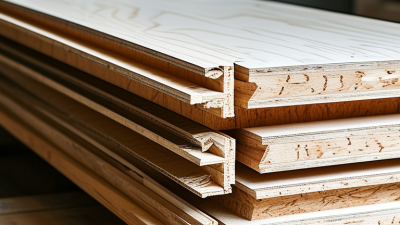
Bamboo plywood flooring is an engineered floor panel made from bonded bamboo strips or veneers. Unlike solid bamboo boards, its layers are pressed under controlled heat and pressure. The grain may run in parallel, crosswise, or in alternating directions. This structure improves dimensional stability, but it does not make the material waterproof.

The visible wear layer carries daily traffic. Inner layers provide strength and help reduce expansion. Horizontal panels show wider bamboo nodes, while vertical panels create a narrower, linear appearance. Strand-woven bamboo uses shredded fibers and resin, producing a denser surface. It feels noticeably heavier underfoot. ISO 22157 provides test methods for bamboo’s physical and mechanical properties, including density and moisture-related performance. Buyers should request test results, not rely on appearance alone.

Applications include bedrooms, offices, retail interiors, and light commercial corridors. Kitchens require careful sealing around sinks and frequent moisture control. Bathrooms remain a risky choice unless the complete flooring system is specifically tested for wet conditions. INBAR reports more than 1,600 bamboo species globally, while its market studies describe bamboo resources across roughly 35 million hectares. These figures show supply potential, not automatic product quality. The FAO Global Forest Resources Assessment 2020 also treats bamboo as an important non-wood forest resource. Still, adhesive emissions, surface coatings, subfloor preparation, and humidity changes can alter performance. The structure is engineered, not invincible.
How to Evaluate Chinese Bamboo Plywood Flooring Manufacturers

When comparing Chinese bamboo plywood flooring manufacturers, begin with evidence, not catalog images. Ask for the factory address, production capacity, and quality manager’s contact details. A video call should show pressing lines, sanding equipment, storage areas, and finished cartons. Empty showrooms prove little. Request samples from two production batches. Compare thickness, edge bonding, color consistency, and surface flatness under natural light. Record moisture readings with a calibrated meter. Small differences matter during installation.

Technical documents should explain bamboo species, strand orientation, adhesive type, pressing temperature, and formaldehyde test results. Ask whether an independent laboratory completed the testing. Confirm that the report matches the exact product code. Verify abrasion, slip, dimensional stability, and moisture performance for your target climate. An experienced manufacturer can explain packing, container loading, replacement procedures, and installation guidance. Vague answers deserve a pause.

Reliable suppliers maintain batch numbers from raw bamboo to final inspection. Look for written inspection checkpoints, not promises alone. Request references from comparable projects while protecting confidentiality. Discuss tolerances, lead times, payment stages, and claims before ordering. A low quotation may hide weaker cores or unstable finishes. That risk is easy to underestimate. Include a small trial order, because a perfect sample may not represent routine output. Even careful buyers can miss seasonal moisture changes. Keep that possibility visible in the purchasing plan.

Top 10 Chinese Bamboo Plywood Flooring Manufacturers for Global Buyers

China’s top 10 bamboo plywood flooring manufacturers attract global buyers through stable production, flexible customization, and competitive export experience. The strongest suppliers usually operate kiln-drying lines, multi-layer pressing equipment, and controlled finishing rooms. These details matter when flooring must withstand humidity, foot traffic, and repeated cleaning.

A reliable manufacturer should provide test reports for formaldehyde emissions, moisture content, bonding strength, and surface wear. Ask for recent factory photographs, production samples, and batch records. Experienced buyers should compare tongue-and-groove accuracy, core density, coating thickness, and packaging protection. A sample may look excellent, yet a full shipment can reveal uneven color or slight warping. That risk deserves honest discussion.

Tips: Request two samples from different batches. Check the locking joints by hand. Measure thickness at several points. Confirm carton markings, pallet treatment, lead time, and replacement terms before payment. Suppliers with clear technical answers are often more dependable than those offering only the lowest quotation. Still, no factory is perfect; independent inspection remains worthwhile, especially for large projects. Consider local climate, installation method, and maintenance habits before choosing among China’s top 10 bamboo plywood flooring manufacturers.

Product Quality, Certifications, Pricing, and Export Capabilities Compared

China Top 10 Bamboo Plywood Flooring Manufacturers for Global Buyers?

When comparing China’s leading bamboo plywood flooring manufacturers, product quality starts with raw material control. Mature bamboo, usually harvested after several years, should show consistent color, density, and moisture content. Buyers should request surface hardness, dimensional stability, bonding strength, and formaldehyde test reports. Ask for batch samples. Factory photos are not enough.

Certifications require careful checking. FSC may confirm responsible forestry sources, while ISO 9001 indicates documented quality procedures. E1 or E0 emission grades are useful for interior projects, but test methods and report dates must match the destination market. CE, ASTM, or EN compliance may apply differently. Certification logos alone prove little. Verify the certificate holder, testing laboratory, product scope, and expiration date.

Pricing depends on thickness, strand structure, surface treatment, finish, packaging, and order volume. A cheaper FOB quotation may exclude edge sealing, inspection, or stronger export crates. Compare identical specifications, not only square-meter prices. Reliable suppliers should explain payment terms, production lead time, container loading plans, and moisture protection. Export experience also includes accurate commercial invoices, packing lists, certificates of origin, and responsive after-sales communication. Some suppliers appear highly capable online, yet their sample quality is inconsistent. That weakness deserves attention. A small trial order and independent pre-shipment inspection can expose problems before a full container leaves the port.

Bamboo Plywood Flooring: Indicative FOB Price by Thickness

The chart presents indicative China FOB price ranges for bamboo plywood flooring by panel thickness. Actual quotations vary according to strand orientation, density, surface finishing, formaldehyde class, order volume, packaging, and destination port.

For global purchasing, buyers should verify formaldehyde compliance such as EN 717-1 E1, CARB Phase 2, or equivalent requirements, request moisture and bonding test reports, and confirm export documentation, container loading plans, and destination-market certifications before placing an order.

How Global Buyers Can Select and Purchase from the Right Supplier

Selecting from China’s top bamboo plywood flooring manufacturers requires more than comparing online rankings. Global buyers should verify factory experience, production capacity, and export history. Request recent project references from similar climates and applications. A supplier serving humid regions may understand moisture control better than one focused only on domestic sales.

Ask for technical documents before requesting a final quotation. These should include bamboo species, layer structure, adhesive type, formaldehyde test results, moisture content, wear resistance, and dimensional tolerances. Confirm whether testing follows the standards required in your destination market. Certificates need checking.

Samples reveal details that brochures often hide. Examine surface consistency, edge finishing, locking accuracy, and color variation under natural light. Install several boards on a test panel. Leave the panel in the target climate for several days. Small gaps may appear. That matters. It can expose weak conditioning or packaging practices.

Purchasing terms deserve equal attention. Compare minimum order quantities, sample charges, lead times, packaging protection, and replacement policies for damaged goods. Clarify who pays for independent inspections and how claims are documented. A written specification should cover every measurable detail, including pallet labels and carton markings.

Do not choose solely by the lowest price. Cheap adhesive or unstable core materials can create costly failures after installation. Still, premium pricing does not guarantee consistent quality. One practical mistake is trusting a factory audit completed only through video calls. On-site verification or an independent inspection is safer when the order is substantial. Keep communication records, approve a pre-production sample, and link payment milestones to verified production progress.

China Top 10 Bamboo Plywood Flooring Manufacturers for Global Buyers? - How Global Buyers Can Select and Purchase from the Right Supplier

Anonymous supplier-selection scorecard for comparing bamboo flooring manufacturers without relying on company names or brand claims.

No. Evaluation Dimension Suggested Weight Comparable Benchmark Documents or Tests to Request Why It Matters to Global Buyers
1 Product Construction 15% Confirm whether the flooring is horizontal bamboo, vertical bamboo, strand-woven bamboo, or engineered multilayer construction. Record total thickness, wear-layer thickness, core material, and surface finish. Technical data sheet, cross-section drawing, product samples, and signed construction specification. Construction directly affects dimensional stability, appearance, installation method, service life, and suitability for residential or commercial projects.
2 Dimensional Stability 14% Require moisture-conditioning and dimensional-change results under conditions representative of the destination market. Do not compare suppliers using moisture targets alone. Independent laboratory test report covering swelling, shrinkage, warping, and moisture content. Bamboo is hygroscopic; performance can change with indoor humidity, shipping conditions, and installation environment.
3 Formaldehyde and Indoor-Air Compliance 14% For the United States, request evidence applicable to TSCA Title VI or CARB Phase 2 requirements where the product falls within regulated composite-wood categories. For Europe, request the applicable EN classification and destination-country requirements. Current third-party emissions report, product scope statement, batch traceability, and declaration of adhesives used. Emission limits differ by market and product construction. A test report should match the exact product, thickness, adhesive system, and factory.
4 Mechanical Performance 12% Compare hardness, wear resistance, scratch resistance, bonding strength, and surface durability using the same test method and product thickness. Laboratory reports referencing recognized ASTM, ISO, EN, or equivalent test methods; include test date and sample identification. Comparable test methods help buyers avoid selecting a product based only on marketing descriptions such as “high hardness” or “super durable.”
5 Moisture and Mold-Control Process 10% Factory should document bamboo storage, kiln-drying, moisture measurement, adhesive curing, and finished-goods inspection procedures. Process flow chart, moisture-control records, warehouse photographs, inspection checklist, and corrective-action records. Controlled moisture management reduces the risk of cupping, gaps, cracking, delamination, and claims after installation.
6 Raw-Material Traceability 9% Request documented bamboo species, harvesting region, supplier records, treatment process, and chain-of-custody information where sustainability claims are made. Raw-material purchase records, harvesting documentation, traceability procedure, and valid chain-of-custody certificate when applicable. Traceability supports responsible sourcing, customs documentation, environmental claims, and consistent product quality.
7 Quality-Control System 9% Evaluate incoming-material inspection, in-process controls, final inspection, sampling plans, defect classification, and lot-level traceability. An ISO 9001-certified system can be useful evidence but does not replace product testing. Quality manual, inspection records, sample approval process, nonconformity reports, and calibration certificates for measuring equipment. A repeatable quality system is more reliable than a one-time sample when buyers place recurring or container-volume orders.
8 Customization and Compatibility 7% Confirm available dimensions, edge profiles, click or tongue-and-groove systems, unfinished or prefinished surfaces, colors, packaging, and installation accessories. Approved technical drawing, sample approval form, finish panel, packaging specification, and change-control procedure. Early confirmation prevents incompatibility with local installers, underlayments, subfloors, building codes, and distribution packaging.
9 Export Packaging and Logistics 5% Packaging should protect against impact and moisture during ocean transport. Confirm carton dimensions, pallet configuration, container loading plan, labeling, and export documentation. Packaging specification, loading photographs, moisture-protection plan, packing list template, and previous shipment inspection records with confidential details removed. Packaging quality affects breakage, moisture exposure, warehouse handling, container utilization, and landed cost.
10 Commercial Reliability and After-Sales Support 5% Assess written lead times, production capacity, payment terms, warranty scope, replacement policy, claim-response time, and communication process. Use a purchase contract with measurable acceptance criteria. Pro forma invoice, warranty terms, quality agreement, inspection protocol, complaint procedure, and anonymized shipment references. Clear commercial controls reduce disputes over shade variation, tolerances, shortages, transit damage, and replacement responsibilities.